
The rapid advancement of Artificial Intelligence (AI) technology has revolutionized industries across the globe, enabling businesses to make data-driven decisions, automate processes, and create personalized experiences for customers. However, harnessing the power of AI often demands significant expertise, resources, and infrastructure, making it a daunting challenge for many organizations. Enter “AI as a Service” (AIaaS), a game-changing concept that democratizes AI by providing on-demand access to cutting-edge AI capabilities without the need for extensive in-house development. In this article, we explore how AIaaS is transforming the landscape of business and technology and the benefits it offers to organizations of all sizes.
What is AI as a Service?
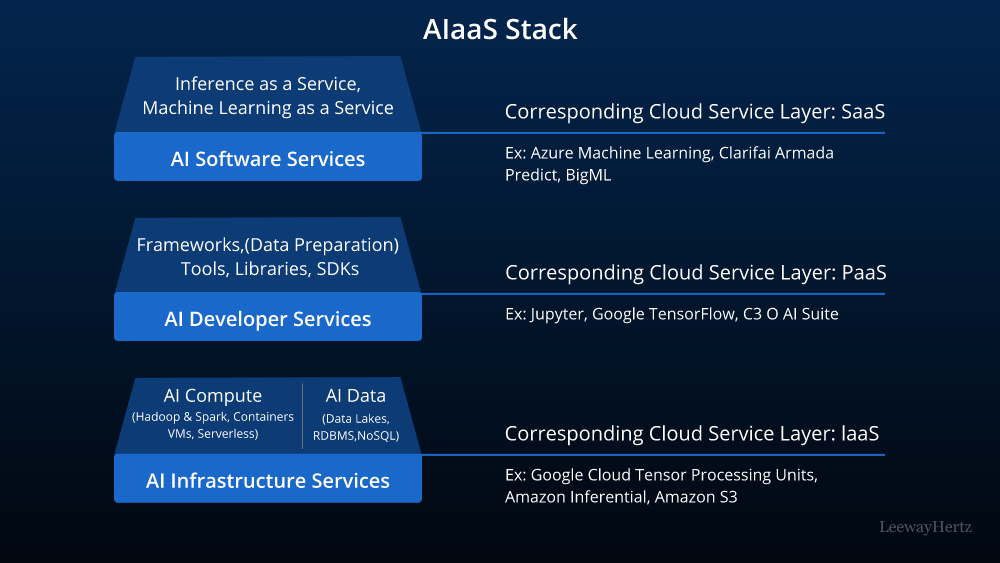
AI as a Service is a cloud-based solution that offers companies the ability to access a wide array of AI tools and services via the internet. Instead of investing in costly hardware, software, and specialized AI talent, businesses can now leverage external providers to access AI algorithms, machine learning models, natural language processing, computer vision, and other AI-driven services. This model allows organizations to focus on their core competencies while harnessing the potential of AI to drive innovation and growth.
Key Features and Components
- Scalability: AIaaS providers offer scalable solutions that can accommodate the varying needs of different businesses. Whether it’s a small startup or a large enterprise, organizations can easily adjust their AI usage based on demand, without worrying about infrastructure limitations.
- Cost-effectiveness: By adopting AIaaS, businesses can significantly reduce the upfront costs associated with building and maintaining an in-house AI infrastructure. The pay-as-you-go model ensures that companies pay only for the resources they use, making AI accessible to startups and small businesses as well.
- Versatility: AIaaS provides a wide range of AI tools and services, covering diverse applications such as natural language processing, computer vision, speech recognition, predictive analytics, and more. Organizations can choose and integrate the services that best align with their unique requirements.
- Security and Compliance: Reputable AIaaS providers prioritize data security and compliance, ensuring that sensitive information is protected and adheres to industry regulations and standards.
Benefits of AI as a Service
- Accelerated Time-to-Market: With AIaaS, businesses can rapidly deploy AI-driven applications and services, reducing the time and effort required for development and integration. This agility enables organizations to respond quickly to market demands and gain a competitive edge.
- Access to Expertise: AIaaS providers house teams of skilled AI professionals who continuously update and improve the AI services offered. Companies can leverage the expertise of these specialists without investing in hiring and training AI talent internally.
- Democratization of AI: Previously, only tech giants and well-funded organizations could afford to develop and implement AI solutions. AIaaS democratizes access to AI, allowing startups and small businesses to leverage the same advanced technologies as their larger counterparts.
- Enhanced Flexibility: As business needs evolve, organizations can easily switch between AI services or scale their usage up or down, ensuring a flexible AI strategy that aligns with their goals.
- Reduced Risks: AIaaS providers handle infrastructure maintenance, updates, and security, reducing the burden of operational risks on businesses and allowing them to focus on leveraging AI for growth.
Challenges and Considerations
While AIaaS offers numerous advantages, there are some challenges and considerations to bear in mind:
- Data Privacy: As AIaaS providers handle sensitive data, businesses must carefully assess the privacy policies and security measures of the chosen vendor.
- Vendor Lock-in: Organizations must consider the implications of vendor lock-in when relying heavily on AIaaS. Ensuring compatibility with alternative providers or a smooth transition to in-house solutions is essential.
Conclusion
AI as a Service has emerged as a transformative solution, empowering businesses to harness the potential of AI without the complexity and expense of developing in-house capabilities. By offering scalable, cost-effective, and versatile AI tools, AIaaS has democratized AI and made it accessible to organizations of all sizes. With AIaaS, businesses can accelerate their innovation, gain a competitive edge, and thrive in the AI-driven era of the future. As the technology continues to evolve, AIaaS will undoubtedly play a pivotal role in shaping the business landscape for years to come.
To Learn More:- https://www.leewayhertz.com/ai-as-a-service/
 Jasper's financial blog