
In the rapidly evolving world of technology, chatbots have become an essential tool for businesses to enhance customer support, streamline operations, and improve user engagement. An AI-powered chatbot is an intelligent virtual assistant capable of simulating human-like conversations, making it an invaluable asset for automating customer interactions. In this article, we will explore the step-by-step process of building an AI-powered chatbot to elevate your business to new heights.
Step 1: Define Objectives and Use Cases
Before diving into the development process, it is essential to identify the purpose and goals of your chatbot. Determine the primary objectives you want the chatbot to achieve and the specific use cases it will address. Whether it’s providing customer support, answering frequently asked questions, or guiding users through a sales funnel, a clear understanding of the chatbot’s intended tasks will steer the development process in the right direction.
Step 2: Choose the Right Platform and Framework
Selecting the appropriate platform and framework is crucial for building an effective AI-powered chatbot. Several popular options, such as Dialogflow, Microsoft Bot Framework, and IBM Watson, offer a range of features to suit various needs. Consider factors such as ease of integration, scalability, and natural language processing capabilities when making your decision.
Step 3: Designing the Chatbot’s Conversational Flow
An intuitive and user-friendly conversational flow is vital for the success of your chatbot. Create a dialogue map that outlines various user interactions and potential responses the chatbot should offer. Utilize branching logic to handle diverse user inputs effectively and ensure a seamless conversation experience.
Step 4: Implement Natural Language Processing (NLP)
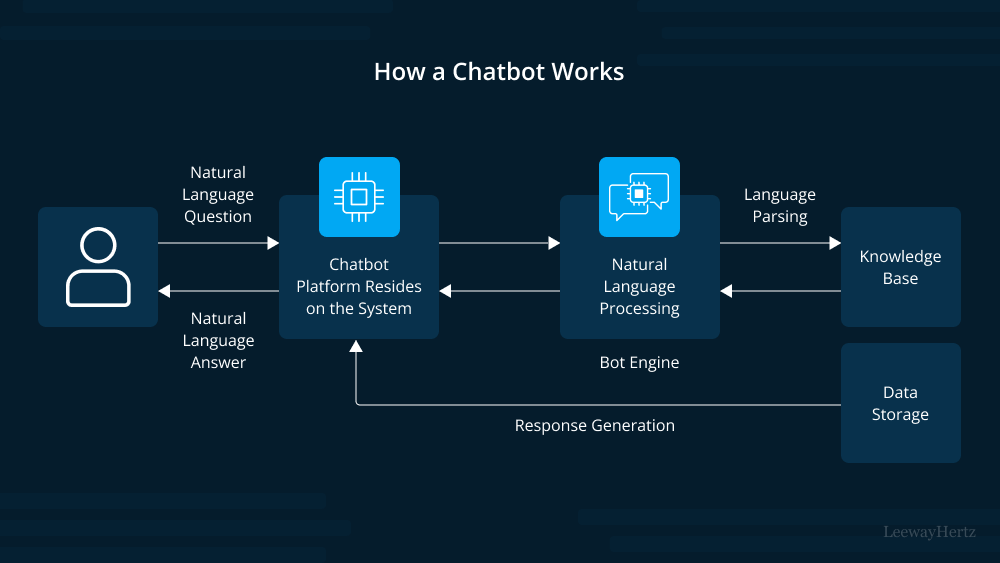
Natural Language Processing is the backbone of any AI-powered chatbot. It enables the bot to understand and interpret user queries in a human-like manner. Integrate NLP capabilities into your chosen platform to empower your chatbot with the ability to comprehend various phrasings, synonyms, and language nuances.
Step 5: Develop and Train the Chatbot
With the foundational work laid out, it’s time to develop and train your chatbot. Use the selected framework to create the chatbot’s backend, connecting it to your chosen messaging channels like website chat widgets, Facebook Messenger, or WhatsApp. Train your chatbot with relevant data to improve its accuracy and response capabilities over time.
Step 6: Add AI and Machine Learning
To make your chatbot even smarter, consider integrating AI and machine learning technologies. This can be achieved by enabling the chatbot to learn from user interactions and improve its responses continuously. AI and machine learning can also help in personalizing user experiences, leading to higher customer satisfaction.
Step 7: Test Rigorously
Before deploying your chatbot to the public, conduct thorough testing to identify and fix any bugs or issues. Simulate various user scenarios and verify if the chatbot responds accurately and appropriately. User feedback during this stage can be invaluable for fine-tuning the chatbot’s performance.
Step 8: Deploy and Monitor
Once you are satisfied with the chatbot’s performance, deploy it to your desired platforms and start engaging with users. Keep a close eye on its interactions and gather user feedback to identify areas for improvement. Regularly update the chatbot’s knowledge base to keep it up-to-date with the latest information.
Conclusion
Building an AI-powered chatbot is an exciting journey that can significantly enhance your business operations and customer experience. By defining clear objectives, selecting the right platform, implementing natural language processing, and incorporating AI and machine learning, you can create a chatbot that impresses users with its capabilities and fosters long-lasting relationships with your customers. Remember, continuous improvement is key, so always monitor user interactions and refine your chatbot to adapt to changing needs and preferences. Embrace the power of AI, and your chatbot will undoubtedly become a valuable asset for your business in the digital age.
To Learn More:- https://www.leewayhertz.com/ai-chatbots/
 Jasper's financial blog