
Introduction
In the dynamic landscape of asset management, staying ahead of the curve is imperative for sustained success. One of the revolutionary technologies reshaping the industry is Generative AI. This article delves into the transformative impact of Generative AI in asset management, exploring its benefits and applications.
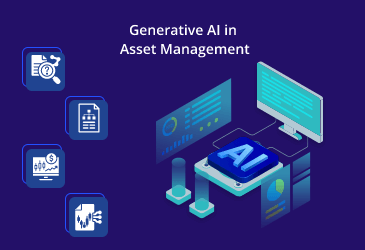
Understanding Generative AI in Asset Management
Generative AI, a subset of artificial intelligence, focuses on creating new content rather than relying solely on learned patterns. In asset management, this technology goes beyond conventional approaches, offering innovative solutions to age-old challenges.
Benefits of Generative AI for Asset Management
- Enhanced Decision-Making Processes Generative AI empowers asset managers with advanced predictive analytics. By analyzing vast datasets, it enhances decision-making processes, providing insights into market trends and potential investment opportunities.
- Risk Mitigation and Compliance The ability of Generative AI to simulate various scenarios aids in risk assessment. Asset managers can navigate potential risks more effectively, ensuring compliance with regulations and optimizing risk-adjusted returns.
- Increased Operational Efficiency Automation is a key benefit of Generative AI. Routine tasks such as data analysis, report generation, and portfolio optimization can be automated, allowing asset managers to focus on strategic decision-making and client relationships.
- Personalized Investment Strategies Generative AI enables the customization of investment strategies based on individual client profiles and market conditions. This personalization enhances client satisfaction and loyalty.
Applications of Generative AI in Asset Management
- Portfolio Optimization Generative AI algorithms analyze historical market data and simulate various portfolio scenarios. This enables asset managers to optimize portfolios for maximum returns while managing risk effectively.
- Market Trend Prediction By processing vast amounts of real-time data, Generative AI predicts market trends and identifies potential investment opportunities. This proactive approach allows asset managers to position portfolios strategically.
- Natural Language Processing (NLP) for Sentiment Analysis Generative AI, particularly in the form of NLP, is used for sentiment analysis of financial news, social media, and other textual data. This helps asset managers gauge market sentiment and make informed decisions.
- Algorithmic Trading Strategies Generative AI plays a crucial role in developing and optimizing algorithmic trading strategies. By learning from historical data, these algorithms can adapt to changing market conditions in real-time.
Challenges and Considerations
While Generative AI offers numerous advantages, it is essential to acknowledge potential challenges. Issues such as data privacy, bias in algorithms, and the need for continuous monitoring must be addressed to ensure responsible and ethical use of this technology in asset management.
Conclusion
Generative AI is not just a technological advancement; it is a paradigm shift in how asset management operates. The benefits of enhanced decision-making, risk mitigation, and personalized strategies position Generative AI as a valuable tool for asset managers looking to thrive in an ever-evolving financial landscape. By embracing this technology responsibly, asset management firms can unlock new possibilities and drive success in the years to come.
 Jasper's financial blog