Hiring Action Transformer Model Developers: Pioneering the Future of AI

In the rapidly evolving landscape of artificial intelligence (AI), one of the most promising advancements in recent years is the Action Transformer model. This groundbreaking approach to AI development has revolutionized various applications, from natural language processing to computer vision. As organizations strive to harness the power of this cutting-edge technology, the demand for skilled Action Transformer model developers is on the rise. In this article, we’ll explore the key reasons why hire Action Transformer model developers can be a game-changer for your company.
The Power of Action Transformers

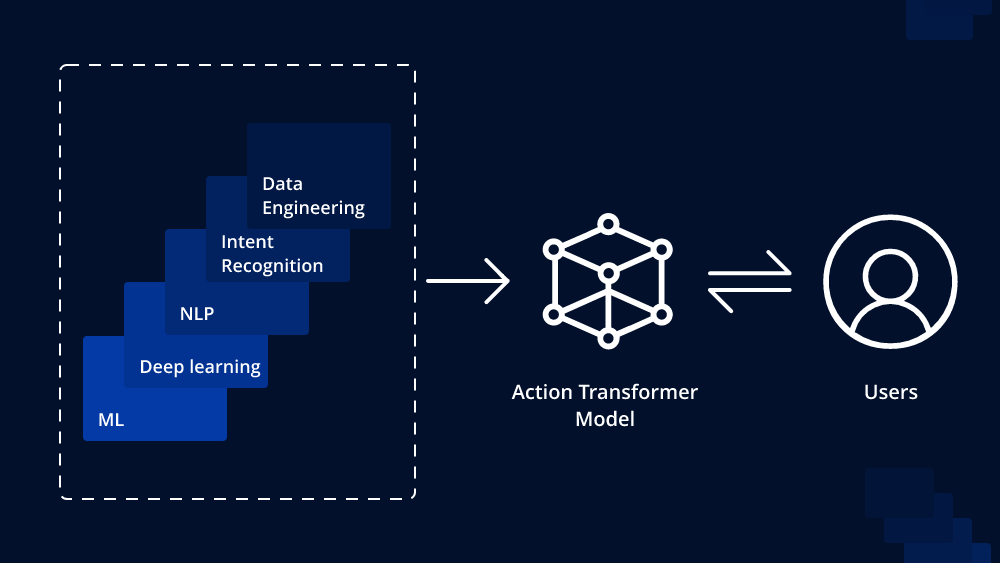
Action Transformers represent a significant leap forward in the field of AI. They go beyond traditional transformer models by incorporating dynamic actions and interactions into their architecture. This enables them to simulate multi-step decision-making processes, making them exceptionally adept at tasks that involve sequential or relational data. Whether it’s generating coherent and contextually relevant text, predicting future states in a video stream, or even enhancing autonomous systems, Action Transformers have proven their potential across a wide array of applications.

Why Hire Action Transformer Model Developers?

  1. Expertise in Complex Problem Solving: Action Transformer model developers possess a deep understanding of intricate problem-solving techniques. Their ability to devise and implement algorithms that capture intricate dependencies and interactions within data sets sets them apart from conventional AI developers.
  2. Seamless Integration of Sequential Data: Tasks involving sequential data, such as language translation, video analysis, and time-series predictions, require models that comprehend and act on patterns over time. Action Transformer developers excel in building models that can capture and process sequential information, thereby delivering more accurate and insightful results.
  3. Enhanced Natural Language Processing: NLP tasks, such as chatbots, sentiment analysis, and language generation, greatly benefit from Action Transformers’ capability to understand context and generate coherent responses. By hiring developers skilled in this technology, companies can create AI-powered solutions that truly understand and communicate with humans.
  4. Advanced Computer Vision Applications: Action Transformers have also shown remarkable success in computer vision tasks. They can analyze video data, track objects across frames, and predict future states with unparalleled accuracy. Developers proficient in Action Transformers can create solutions that redefine surveillance, autonomous driving, and predictive maintenance.
  5. Personalized User Experiences: Action Transformer models enable the creation of highly personalized user experiences. By recognizing individual behaviors and preferences, these models can adapt and tailor interactions, resulting in improved customer engagement and satisfaction.
  6. Innovation and Competitive Edge: In the ever-evolving tech landscape, staying ahead of the competition requires continuous innovation. Companies that embrace Action Transformer models gain a competitive edge by delivering state-of-the-art AI solutions that outperform traditional approaches.
  7. Versatility Across Industries: The versatility of Action Transformers makes them applicable across diverse industries, such as healthcare, finance, e-commerce, and entertainment. Hiring skilled developers empowers organizations to tap into new markets and develop novel applications.
  8. Efficient Resource Utilization: While Action Transformers are highly sophisticated, developers with expertise in this field can design efficient models that achieve remarkable results with optimal computational resources. This efficiency translates into cost savings and improved performance.

Conclusion

As AI technology continues to advance, the importance of Action Transformer model becomes increasingly evident. Their ability to handle complex sequences of actions and interactions propels AI applications to new heights of accuracy and sophistication. By hiring skilled Action Transformer model developers, companies position themselves at the forefront of AI innovation, ready to tackle the most intricate challenges across various industries. As the demand for AI-driven solutions continues to grow, investing in talent capable of harnessing the power of Action Transformers is a strategic move that can yield significant long-term benefits.
AI Use Cases in Private Equity and Principal Investment

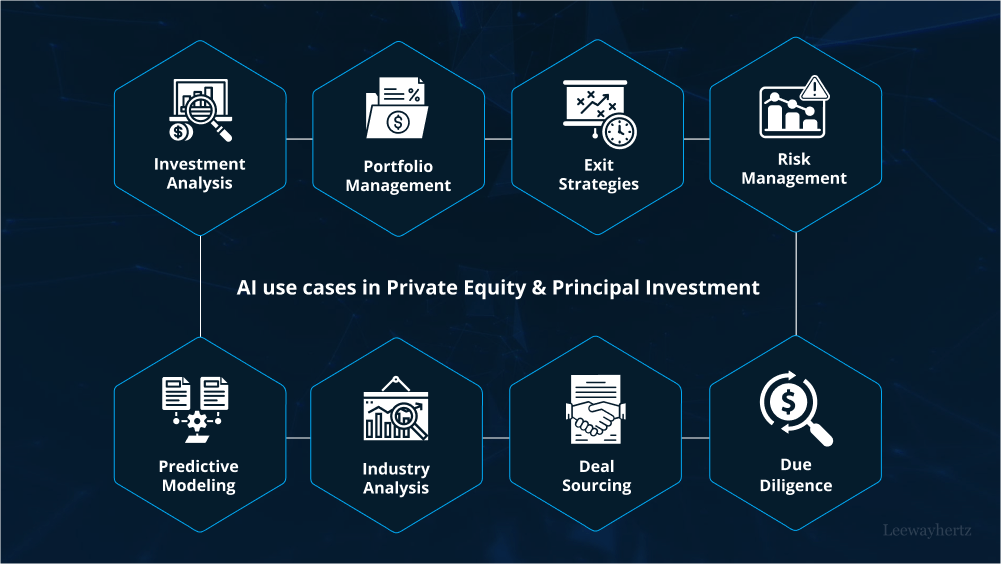
Artificial Intelligence (AI) has emerged as a transformative force across various industries, reshaping business operations and decision-making processes. In the realm of finance, particularly within private equity and principal investment, AI is revolutionizing how investment strategies are formulated, risks are managed, and opportunities are identified. This article explores the dynamic landscape of AI applications in private equity and principal investment, highlighting key use cases and their impact on the industry.

Enhancing Due Diligence

One of the fundamental aspects of private equity and principal investment is due diligence – the meticulous process of assessing the viability and potential risks of investment opportunities. AI-driven algorithms excel in sifting through massive amounts of data, analyzing financial statements, market trends, and industry benchmarks to provide a comprehensive understanding of potential investments. Machine learning models can swiftly identify patterns, anomalies, and red flags that might escape human scrutiny, thus aiding in making more informed investment decisions.

Predictive Analytics for Investment Performance

AI-powered predictive analytics has the potential to provide valuable insights into the future performance of investments. By analyzing historical data and market trends, AI algorithms can generate forecasts about the financial performance of companies or assets, enabling investors to anticipate potential returns and risks. These predictive models can assist in optimizing portfolio allocation and making strategic adjustments based on market dynamics.

Portfolio Management and Optimization

AI’s ability to process vast amounts of data in real time allows private equity firms and principal investors to effectively manage and optimize their portfolios. Advanced algorithms can continuously monitor market conditions, news sentiment, and company-specific events to provide up-to-date recommendations for portfolio rebalancing. This dynamic approach ensures that investment strategies remain aligned with shifting market trends and investor objectives.

Risk Assessment and Mitigation

AI-driven risk assessment tools play a crucial role in evaluating the potential risks associated with investment opportunities. Machine learning algorithms can identify hidden risks by analyzing historical data and recognizing patterns that may indicate financial distress or other adverse circumstances. This enables investors to make more informed decisions and implement risk mitigation strategies proactively.

Deal Sourcing and Opportunity Identification

AI-powered algorithms are transforming the way private equity firms and principal investors identify potential investment opportunities. Natural Language Processing (NLP) techniques can scan vast amounts of news articles, financial reports, and social media data to identify emerging trends and market inefficiencies. This not only expedites deal sourcing but also enables investors to stay ahead of the curve in identifying promising investment targets.

Operational Efficiency and Cost Reduction

Beyond investment decisions, AI offers opportunities for operational efficiency and cost reduction within private equity and principal investment firms. Automation of routine tasks such as data entry, reporting, and compliance can free up valuable human resources to focus on more strategic activities. Additionally, AI-powered chatbots and virtual assistants can enhance communication with clients and stakeholders, providing timely responses to inquiries and streamlining customer interactions.

Challenges and Considerations

While the potential of AI in private equity and principal investment is immense, there are challenges that require careful consideration. The quality and accuracy of data fed into AI models are critical, as erroneous or biased data can lead to flawed insights and decisions. Moreover, the integration of AI technologies into existing workflows and the need for specialized expertise may pose implementation challenges.

Conclusion

AI is reshaping the landscape of private equity and principal investment, enabling firms to make more informed decisions, optimize portfolios, and identify lucrative opportunities. The ability of AI to process vast amounts of data, predict future trends, and enhance operational efficiency positions it as a transformative tool for the industry. As technology continues to advance, private equity and principal investment professionals should embrace AI’s potential while being mindful of the challenges and considerations that come with its implementation. The synergy between human expertise and AI-driven insights will likely define the success of future investment strategies in an ever-evolving financial landscape.

AI Chatbot Developers: Crafting Intelligent Virtual Assistants for the Future

AI Chatbot Developers: Crafting Intelligent Virtual Assistants for the Future

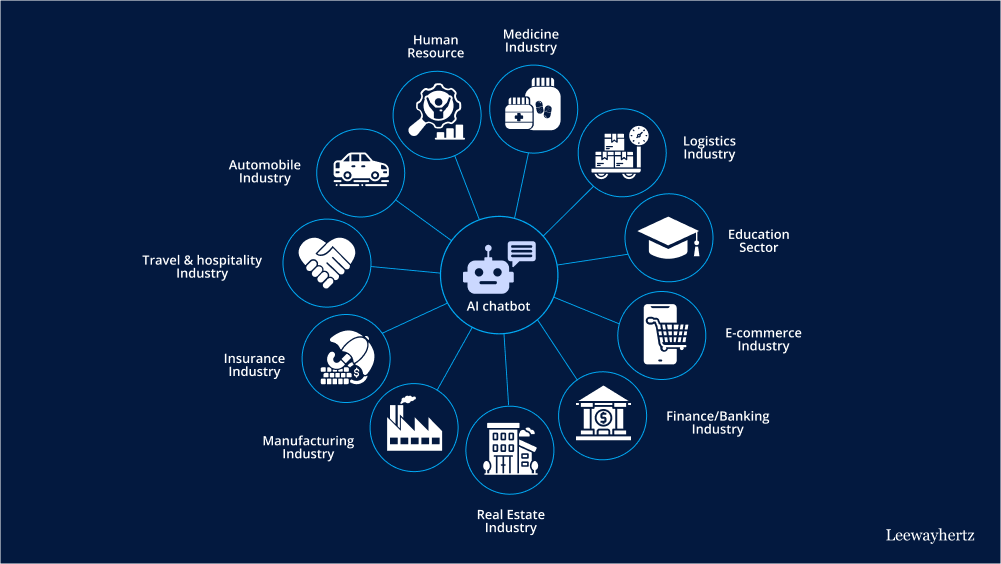
AI chatbots have become integral to modern business strategies, revolutionizing customer interactions and process automation. Behind the success of these intelligent virtual assistants are skilled AI Chatbot Developers, who possess the expertise to build, train, and deploy AI-powered chatbots that elevate customer experiences and drive operational efficiency. In this article, we will explore the vital role of AI chatbot developers and the key qualities that set them apart in crafting innovative solutions for businesses.

Proficiency in AI Technologies
AI chatbot developers are experts in a wide range of AI technologies, including natural language processing (NLP), machine learning, deep learning, and neural networks. Their in-depth knowledge allows them to design chatbots that can understand, interpret, and respond to human language with a high level of accuracy and contextual understanding. Leveraging these cutting-edge technologies, AI chatbot developers create chatbots that continually learn and improve from user interactions.

Customization and Tailored Solutions
Exceptional AI chatbot developers understand that every business is unique, with its specific requirements and branding. They work closely with enterprises to provide customized solutions that align with the business goals and the target audience. Tailoring the chatbot’s personality, tone, and capabilities ensures a seamless integration into the brand’s identity, resulting in a more engaging user experience.

Multi-Platform Expertise
In today’s multi-channel digital landscape, AI chatbot developers possess expertise in developing chatbots that can operate across various platforms such as websites, social media, mobile applications, and messaging platforms. Their ability to create chatbots that offer consistent and smooth interactions on multiple platforms increases the chatbot’s accessibility and widens its reach.

Continuous Learning and Improvement
AI chatbot developers recognize that the journey of chatbot development does not end with deployment. Instead, it is an ongoing process of learning and improvement. By employing machine learning techniques, developers ensure that the chatbot continuously evolves, adapting to user preferences and refining its responses over time. Regular updates and enhancements guarantee that the chatbot remains efficient and up-to-date.

Data Privacy and Security
Handling sensitive customer data requires a strong commitment to data privacy and security. Ethical AI chatbot developers prioritize data protection by implementing robust encryption methods and complying with relevant data regulations. This dedication to data security establishes trust and credibility with customers, fostering long-term relationships.

Collaborative Approach
Great AI chatbot developers collaborate closely with businesses, fostering transparent communication and understanding the unique needs and challenges faced by the enterprise. They actively involve stakeholders in the development process, ensuring that the final chatbot solution meets and exceeds expectations.

Conclusion

AI chatbot developers play a crucial role in the success of AI-powered virtual assistants that transform customer engagement and streamline business processes. With their proficiency in AI technologies, customization capabilities, multi-platform expertise, commitment to continuous learning, and data privacy focus, AI chatbot developers are instrumental in crafting intelligent chatbot solutions for businesses across industries.

Click here for more information:

https://www.leewayhertz.com/ai-chatbot-development-company/

Enterprise Chatbot Development Service: Empowering Businesses with Intelligent Virtual Assistants

Enterprise Chatbot Development Service: Empowering Businesses with Intelligent Virtual Assistants

In today’s fast-paced business landscape, customer expectations are evolving, and enterprises are seeking innovative solutions to stay ahead of the competition. The Enterprise Chatbot Development Service has emerged as a transformative offering, enabling businesses to build sophisticated and intelligent virtual assistants that revolutionize customer interactions, streamline processes, and enhance overall efficiency. Let’s explore the essence of the Enterprise Chatbot Development Service, its key components, and the benefits it brings to businesses.

Understanding Enterprise Chatbot Development Service

The Enterprise Chatbot Development Service is a specialized service provided by expert development companies to design, create, and deploy chatbots tailored to meet the unique needs of businesses. These chatbots are powered by advanced Natural Language Processing (NLP) and Machine Learning (ML) algorithms, enabling them to comprehend human language, interpret user intent, and deliver contextually relevant responses. The development service covers the entire life cycle of chatbot development, from conceptualization and design to integration and ongoing support.

Key Components of Enterprise Chatbot Development Service

  1. Requirement Analysis and Strategy: The development process begins with an in-depth analysis of the business’s objectives, target audience, and specific use cases. Based on this analysis, a strategic plan is crafted to align the chatbot’s capabilities with the organization’s goals.
  2. Chatbot Design and Development: Skilled AI developers and data scientists collaborate to design the chatbot’s conversational flow, user interface (UI), and backend integrations. The chatbot is trained using relevant datasets and ML algorithms to optimize its performance.
  3. Natural Language Processing (NLP) Integration: The chatbot is equipped with advanced NLP capabilities, allowing it to understand and interpret user queries with a high level of accuracy and context.
  4. Multi-channel Integration: The development service ensures that the chatbot can seamlessly integrate into various communication channels, including websites, mobile apps, social media, and messaging platforms, providing a consistent user experience.
  5. Personalization and Context Awareness: The chatbot can be customized to gather user data and preferences, enabling personalized responses and context retention for more fluid and engaging conversations.

Benefits of Enterprise Chatbot Development Service

  1. Improved Customer Experience: With instant and accurate responses, the chatbot enhances customer satisfaction, providing round-the-clock support and reducing response times.
  2. Enhanced Efficiency: By automating routine tasks and handling multiple interactions simultaneously, the chatbot optimizes business processes and frees up human resources.
  3. Cost Savings: The deployment of an efficient chatbot can lead to significant cost savings in customer support and service operations, reducing the need for human intervention in basic tasks.
  4. Data-Driven Insights: The chatbot generates valuable data on user interactions and preferences, offering businesses actionable insights to improve their offerings and strategies.
  5. Scalability and Adaptability: The chatbot can scale seamlessly to accommodate growing user demands and adapt to changing business requirements.

Implementing the Enterprise Chatbot Development Service

The implementation of the Enterprise Chatbot Development Service generally involves the following steps:

  1. Discovery and Planning: The development team collaborates with the enterprise to understand their specific needs and define the chatbot’s scope and functionalities.
  2. Design and Development: The chatbot’s conversational flow, UI, and backend integrations are designed and developed according to the agreed-upon requirements.
  3. Testing and Optimization: Rigorous testing is conducted to ensure the chatbot performs accurately and efficiently. Optimization efforts are made based on user feedback and data analysis.
  4. Deployment and Integration: Once fully tested and refined, the chatbot is deployed and seamlessly integrated into the enterprise’s platforms.
  5. Monitoring and Support: The development service provides ongoing monitoring and support to ensure the chatbot’s smooth operation and continual improvement.

Conclusion

The Enterprise Chatbot Development Service represents a transformative solution that empowers businesses to leverage AI-driven conversational technology for improved customer interactions and operational efficiency. By collaborating with expert AI developers and data scientists, enterprises can create virtual assistants that deliver personalized experiences, streamline processes, and drive business success. As the technology continues to evolve, the significance of enterprise chatbots in transforming customer engagement and service delivery will only grow, making it an essential component for businesses looking to stay competitive and meet the demands of the modern digital era.

Click here for more information: https://www.leewayhertz.com/enterprise-ai-chatbot-development/

Prompt Engineering and Its Uses?

In the realm of artificial intelligence, language models have witnessed incredible advancements in recent years, enabling them to perform various tasks with astonishing accuracy. Prompt engineering is a critical methodology that plays a pivotal role in harnessing the true potential of language models. In this article, we will explore what prompt engineering entails and delve into its diverse applications.

Understanding Prompt Engineering

Prompt engineering is a technique used to fine-tune or modify the input instructions, called prompts, given to a language model. By crafting prompts carefully, researchers and developers can guide the model’s behavior and tailor its output to specific requirements. This method enables the manipulation of model responses, bias mitigation, and enhances the model’s overall performance on particular tasks.

The Role of Prompt in Language Models

Language models, like GPT-3, are designed to generate human-like text by predicting the most probable words based on the context provided in the input prompt. The prompt can be a few words or a complete sentence, instructing the model on what to focus on or how to respond to certain inputs. It essentially sets the tone and direction for the model’s output.

Uses of Prompt Engineering

  1. Task-Specific Outputs:
    Prompt engineering allows language models to be tailored for specific tasks. By framing the input prompt according to the requirements of the task, the model can produce highly relevant and accurate responses. For instance, by appending the instruction “Translate the following English text into French,” the model can be used as a language translation tool.
  2. Zero-Shot Learning:
    One of the most remarkable applications of prompt engineering is in zero-shot learning. With carefully crafted prompts, language models can perform tasks they were never explicitly trained for. For example, a model trained on general language can answer domain-specific questions by providing appropriate prompts.
  3. Bias Mitigation:
    Language models can inadvertently generate biased outputs due to the biases present in their training data. Prompt engineering can help address this issue by adding explicit instructions to minimize biases in responses. This promotes fairness and inclusivity in AI applications.
  4. Controlled Text Generation:
    Using prompt engineering, developers can exert control over the style, tone, or sentiment of the model’s output. For instance, for a sentiment analysis task, adding “Write a positive/negative review about…” to the prompt can influence the model’s sentiment in the generated text.
  5. Generating Creative Text:
    By experimenting with different prompts, researchers can push the boundaries of creativity in language models. They can instruct the model to imagine alternative scenarios, generate fictional stories, or even compose poetry, showcasing the model’s artistic potential.
  6. Enhanced Interaction:
    With prompt engineering, language models can better interact with users in conversational settings. By providing a clear context in the prompt, the model can maintain more coherent and contextually appropriate dialogues.

Challenges in Prompt Engineering

While prompt engineering offers various benefits, it also comes with its own set of challenges. Crafting the perfect prompt requires a deep understanding of the model’s behavior and may demand multiple iterations to achieve the desired output. Additionally, biases can inadvertently be introduced in prompts, leading to unintended consequences.

Conclusion

Prompt engineering has emerged as a powerful tool in shaping the behavior of language models, allowing researchers and developers to steer their outputs towards specific tasks and requirements. By fine-tuning the input instructions, prompt engineering opens up a world of possibilities, from task-specific responses and bias mitigation to creative text generation and zero-shot learning. As AI technology continues to evolve, prompt engineering will undoubtedly remain a crucial technique in harnessing the full potential of language models while ensuring ethical and responsible AI applications.

To Learn More:- https://www.leewayhertz.com/prompt-engineering/

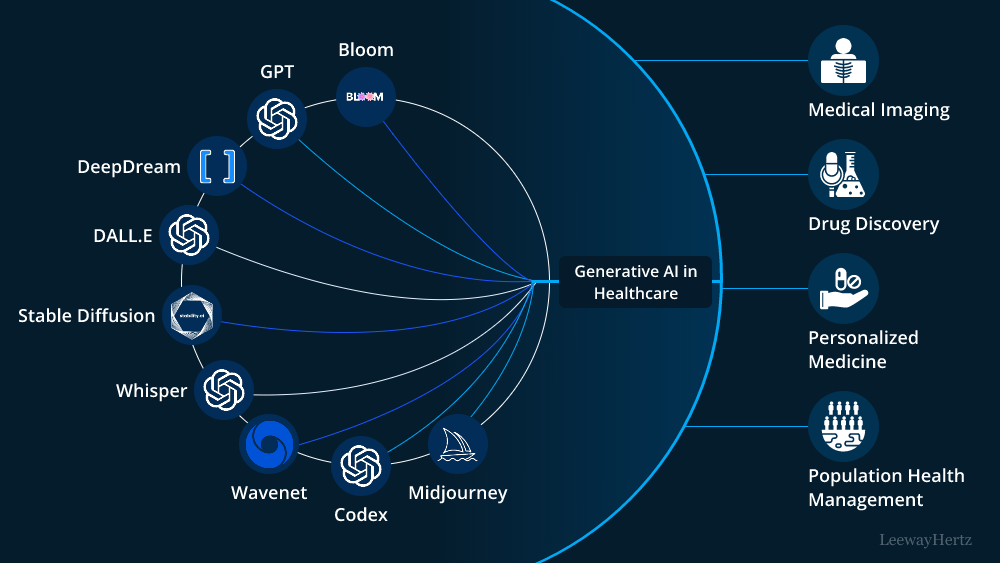
Use Cases of Generative AI in Healthcare

The rapid advancements in Artificial Intelligence (AI) have sparked a revolution in the healthcare industry. One of the most promising and transformative applications of AI in healthcare is Generative AI, which involves using algorithms to generate new data, images, or even human-like text based on patterns learned from existing data. The potential of Generative AI is vast, with various applications that can significantly impact patient care, disease diagnosis, drug discovery, and more. In this article, we will explore ten compelling use cases of Generative AI in healthcare.

  1. Medical Image Generation

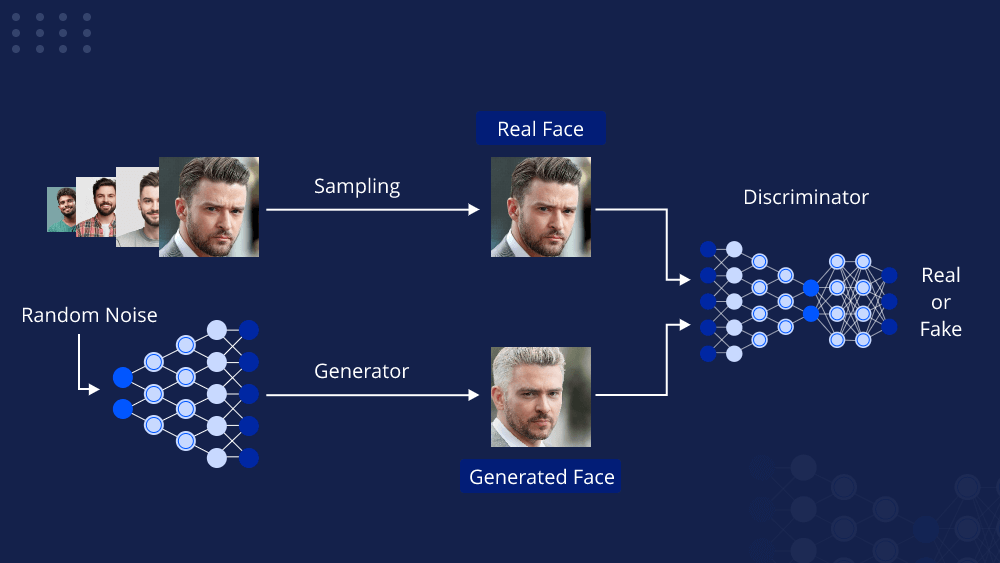
Generative AI models, such as Generative Adversarial Networks (GANs), have shown great promise in generating high-quality medical images. These models can synthesize realistic images of organs, tissues, and even anomalies, helping medical professionals enhance their understanding of complex medical conditions and aiding in surgical planning and medical training.

  1. Drug Discovery

The drug discovery process is often expensive and time-consuming. Generative AI can significantly accelerate this process by designing novel drug compounds based on vast datasets. These AI models can predict the chemical structures of potential drugs with desirable properties, enabling researchers to identify potential candidates more efficiently.

  1. Disease Diagnosis and Prediction

Generative AI algorithms can analyze patient data and generate predictive models for various diseases, such as cancer, diabetes, and cardiovascular conditions. These models can assist healthcare professionals in early detection, accurate diagnosis, and personalized treatment planning, leading to better patient outcomes.

  1. Medical Data Augmentation

To train robust AI models, a significant amount of labeled data is required. Generative AI can help augment the available data by generating synthetic samples, thereby improving the performance of AI models in various medical applications, including image analysis, natural language processing, and clinical decision support systems.

  1. Personalized Treatment Plans

Every patient’s response to treatment can vary due to individual genetic makeup and other factors. Generative AI can leverage patient data to generate personalized treatment plans, suggesting the most suitable therapies and dosages for individual patients, leading to more effective and tailored care.

  1. Electronic Health Record (EHR) Generation

In some cases, medical data may be incomplete or unavailable due to privacy concerns or other limitations. Generative AI can help by generating synthetic electronic health records that mimic real patient data while preserving anonymity, facilitating medical research without compromising patient privacy.

  1. Mental Health Support

Generative AI-powered chatbots and virtual assistants can be designed to interact with patients, providing mental health support and assistance. These AI companions can engage in conversations, offer emotional support, and direct individuals towards appropriate resources when needed, easing the burden on mental health professionals and improving accessibility to mental healthcare.

  1. Speech and Language Generation

Generative AI can be used to create synthetic speech and language models. These models can be utilized to generate natural-sounding speech for patients with speech impairments, assistive devices for individuals with communication difficulties, or even generate medical documentation from spoken input, reducing administrative burdens for healthcare providers.

  1. Medical Simulation and Training

Medical professionals often require extensive training and practice before performing complex procedures. Generative AI can create realistic medical simulations, allowing healthcare students and practitioners to practice surgeries, medical interventions, and emergency scenarios in a safe and controlled environment.

  1. Drug Adverse Event Simulation

Generative AI models can simulate the effects of drugs on a virtual population, predicting potential adverse reactions and interactions before actual clinical trials. This can help in designing safer medications and minimizing risks associated with new drug treatments.

Conclusion

Generative AI has emerged as a powerful tool in healthcare, revolutionizing various aspects of medical research, diagnosis, and patient care. The ten use cases discussed above highlight the potential of Generative AI to transform the healthcare landscape, enabling more precise diagnostics, personalized treatments, and streamlined drug discovery processes. As this technology continues to evolve, its integration into healthcare systems can significantly enhance medical outcomes and improve the overall well-being of patients worldwide. However, it is essential to ensure responsible AI development, ethical use, and proper regulation to maximize the benefits while minimizing potential risks.

To Learn More:- https://www.leewayhertz.com/generative-ai-in-healthcare/

How to Implement an Action Transformer?

The field of natural language processing (NLP) has witnessed significant advancements in recent years, and one of the breakthroughs in this domain is the Action Transformer Model. An Action Transformer is an extension of the traditional Transformer model, which has proven to be highly effective in various NLP tasks such as language translation, text summarization, and sentiment analysis. The Action Transformer takes this one step further by incorporating explicit reasoning and decision-making capabilities, making it particularly useful for tasks that involve multi-step actions or dynamic environments.

Understanding the Action Transformer Model

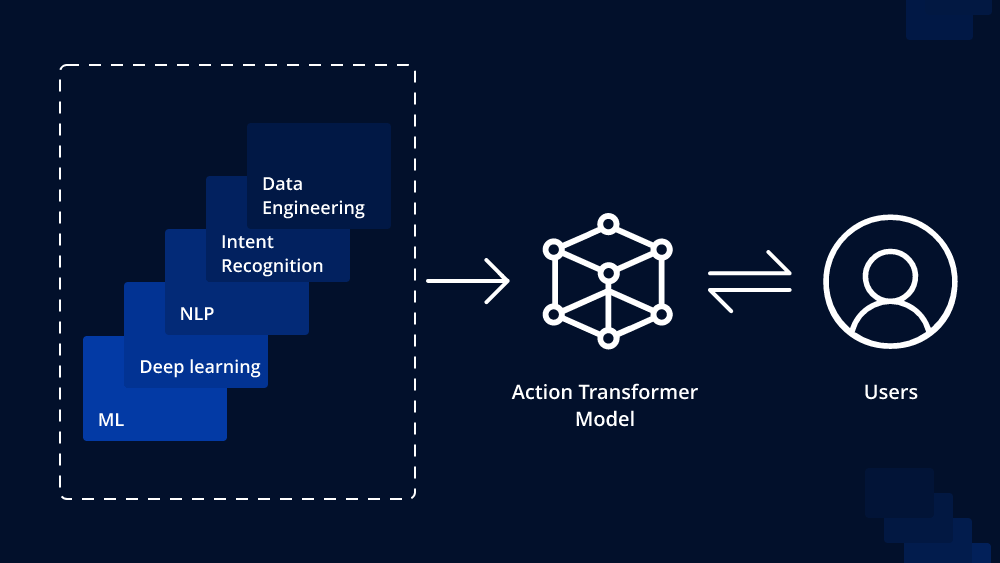
The Action Transformer Model is built upon the principles of the original Transformer architecture, which employs self-attention mechanisms to capture contextual information from input sequences. The primary difference lies in the incorporation of an “action space,” which allows the model to perform explicit reasoning steps and generate dynamic sequences of actions.

In traditional Transformers, the model operates on a fixed-length input sequence and generates a fixed-length output sequence. In contrast, the Action Transformer deals with sequences of variable lengths, allowing it to model dynamic processes and decision-making in a more flexible manner.

Key Components of an Action Transformer

  1. Input Representation: Just like in the original Transformer, the input sequence is first embedded into continuous vector representations using word embeddings. These embeddings serve as the initial input to the model.
  2. Action Space: The action space is a set of possible actions that the model can take at each step. These actions can be predefined or learned during the training process. The model generates a probability distribution over the action space at each decoding step, allowing it to make informed decisions.
  3. Action Decoder: The Action Transformer incorporates an action decoder that takes into account the action space probabilities and generates the next action. This decoder, coupled with the attention mechanism, enables the model to dynamically adapt its behavior based on the input and previous actions.
  4. Reinforcement Learning: To train an Action Transformer, reinforcement learning techniques are often employed. The model is trained to maximize a reward signal, which is provided based on the success of its generated actions in achieving the desired task.

Implementing an Action Transformer

Implementing an Action Transformer can be a complex task, but we can outline the general steps involved:

  1. Data Preprocessing: Prepare the dataset suitable for the task at hand, along with corresponding action spaces and rewards. Ensure that the input sequences and actions are appropriately tokenized.
  2. Architecture Design: Define the architecture of the Action Transformer, including the number of layers, attention mechanisms, and action decoder.
  3. Model Training: Train the model using a suitable optimization algorithm and reinforcement learning techniques. This involves updating the model’s parameters based on the reward signals received during the training process.
  4. Evaluation: Evaluate the model’s performance on a separate validation dataset. Fine-tune hyperparameters and make necessary adjustments to improve the model’s performance.
  5. Inference: Once the model is trained, it can be used for inference on new input sequences to generate desired action sequences.

Applications of Action Transformer

The Action Transformer Model finds applications in various fields, including:

  1. Dialogue Systems: Building chatbots or virtual assistants that can engage in dynamic and contextually relevant conversations.
  2. Robotics: Enabling robots to interact with their environments and perform multi-step tasks based on natural language commands.
  3. Gaming: Creating intelligent agents in video games that can adapt their actions based on the game state and user instructions.
  4. Process Automation: Automating complex tasks in business processes by breaking them down into actionable steps.

Conclusion

The Action Transformer Model represents a significant advancement in the field of natural language processing, incorporating explicit reasoning and decision-making capabilities. By extending the capabilities of the original Transformer architecture, the Action Transformer opens up new possibilities for addressing complex and dynamic NLP tasks. While implementing an Action Transformer can be challenging, the potential benefits in various applications make it a promising area of research and development. As NLP continues to evolve, we can expect the Action Transformer to play a crucial role in enabling machines to understand and generate human-like actions in response to natural language input.

To Learn More:- https://www.leewayhertz.com/action-transformer-model/

Services of an AI Chatbot Development Company

In the rapidly evolving landscape of technology, artificial intelligence (AI) has emerged as a powerful tool that significantly impacts various industries. Among the many applications of AI, chatbots have gained immense popularity due to their ability to enhance customer interactions, streamline business processes, and provide personalized assistance. As a result, AI chatbot development companies have emerged as key players in the software industry, offering a wide range of services to cater to the growing demand for intelligent conversational agents. In this article, we will explore the services provided by AI chatbot development companies and the ways in which they revolutionize businesses across different sectors.

1. Chatbot Development and Customization:

The primary service offered by AI chatbot development companies is the creation and customization of chatbots to suit the unique needs of each business. These companies employ teams of skilled developers and data scientists who use cutting-edge AI technologies, natural language processing (NLP), and machine learning algorithms to build intelligent chatbots. The development process involves understanding the specific requirements of the business, designing conversational flows, integrating with existing systems, and testing to ensure seamless functionality.

2. Industry-Specific Solutions:

AI chatbot development companies cater to a diverse range of industries, including e-commerce, healthcare, finance, customer support, and more. Each sector has its distinct set of challenges and customer expectations. As a result, these companies provide industry-specific chatbot solutions that are tailored to address the unique demands of each domain. For example, in the healthcare sector, chatbots may assist patients with medical inquiries and appointment scheduling, while in e-commerce, they may provide personalized product recommendations and support for online shopping.

3. Multilingual Chatbots:

With businesses expanding globally, the need for multilingual chatbots has become increasingly important. AI chatbot development companies offer services to create chatbots capable of communicating in multiple languages, ensuring seamless interactions with customers from diverse linguistic backgrounds. This capability not only improves customer experience but also widens the reach of businesses, facilitating interactions with a broader audience.

4. Integration with Platforms:

To maximize the efficiency of chatbots, integration with various platforms is crucial. AI chatbot development companies specialize in seamlessly integrating chatbots with websites, mobile applications, social media platforms, and messaging apps. This ensures that customers can interact with chatbots through their preferred channels, making the user experience more convenient and accessible.

5. Continuous Improvement and Maintenance:

The work of AI chatbot development companies doesn’t end with the deployment of chatbots. These companies offer ongoing maintenance and improvement services to ensure that the chatbots remain up-to-date and function optimally. Regular updates, bug fixes, and performance enhancements are part of this service. Additionally, as chatbots interact with users, they gather valuable data, which AI chatbot development companies can use to enhance the chatbot’s capabilities and improve its responses over time.

6. Data Security and Compliance:

AI chatbot development companies place a strong emphasis on data security and compliance. They implement robust security measures to safeguard sensitive user information and ensure compliance with data protection regulations and industry standards. This level of security and adherence to privacy laws fosters trust between businesses and their customers.

7. Analytics and Insights:

Data generated from chatbot interactions is a goldmine of valuable insights. AI chatbot development companies provide analytics services, analyzing the data to offer actionable insights into customer behavior, preferences, and pain points. These insights enable businesses to make informed decisions, enhance their offerings, and improve overall customer satisfaction.

In conclusion, AI chatbot development companies play a pivotal role in reshaping the way businesses interact with their customers. By offering a range of services, from building and customizing chatbots to integrating them with various platforms and providing ongoing support, these companies empower businesses to deliver exceptional customer experiences, increase efficiency, and stay ahead in the competitive market. As technology continues to advance, the services provided by AI chatbot development companies will undoubtedly evolve, driving further innovation and transformation across industries.

To Learn More:- https://www.leewayhertz.com/ai-chatbot-development-company/

Applications of Generative AI Image Models for Image Synthesis

Generative AI image models, often powered by cutting-edge deep learning techniques, have revolutionized the field of computer vision and image synthesis. These models, also known as generative adversarial networks (GANs), variational autoencoders (VAEs), and autoregressive models, have shown remarkable capabilities in generating high-quality, realistic images from scratch. In this article, we will explore the diverse applications of generative AI image models and how they have transformed various industries.

  1. Art and Creativity

Generative AI image models have unlocked unprecedented artistic possibilities. Artists and designers can now use these models as creative tools to generate new artwork, generate novel design concepts, and even reimagine historical masterpieces. By providing the AI model with specific parameters and constraints, artists can direct the style, theme, and elements of the artwork, while still benefiting from the model’s ability to generate unique and imaginative results.

  1. Gaming and Animation

The gaming and animation industries have embraced generative AI image models to create visually stunning graphics and lifelike characters. By using GANs, developers can efficiently generate realistic textures, landscapes, and characters, reducing the time-consuming manual design process. Moreover, AI-powered characters can adapt and evolve based on player interactions, leading to dynamic and immersive gaming experiences.

  1. Fashion and Retail

Generative AI models have also found their place in the fashion and retail sectors. Fashion designers can leverage these models to generate new clothing designs, predict future fashion trends, and create personalized recommendations for customers. Additionally, virtual try-on solutions have become more accurate and realistic, enabling customers to virtually try out clothes before making a purchase.

  1. Healthcare and Medical Imaging

The applications of generative AI image models in healthcare are extensive. These models can synthesize realistic medical images, such as X-rays, CT scans, and MRI images, to augment training data for medical professionals and students. Moreover, AI-generated medical images can be used to simulate various medical conditions, allowing doctors to practice and refine their diagnostic skills without risking patient safety.

  1. Architectural Design and Real Estate

In the field of architecture, generative AI image models are employed to produce realistic 3D models and visualizations of buildings and interior spaces. Architects can use these models to explore different design options, experiment with materials, and showcase their projects to clients in a more immersive way. In the real estate industry, AI-generated images can help create compelling property listings and virtual tours for potential buyers.

  1. Data Augmentation and Image Restoration

Generative AI image models offer an innovative approach to data augmentation. By generating synthetic samples, these models can expand small datasets and enhance model generalization. Data augmentation is particularly beneficial in scenarios with limited labeled data, improving the performance of various computer vision tasks like object detection and segmentation.

Furthermore, generative AI models can also be used for image restoration tasks. They can reconstruct missing or corrupted parts of an image, upscale low-resolution images, and remove noise, resulting in clearer and more detailed visuals.

Conclusion

Generative AI image models have made significant strides in the field of image synthesis, providing immense value across various industries. From unleashing artistic creativity to enhancing medical imaging and advancing architectural design, the applications of these models are far-reaching and continue to evolve rapidly.

As research in the field progresses and technology improves, we can expect even more remarkable advancements in generative AI image models. However, ethical considerations, such as potential misuse and biased generation, must be addressed responsibly to ensure that these powerful tools continue to bring positive impact and benefits to society as a whole.

To Learn More:- https://www.leewayhertz.com/a-guide-on-generative-ai-models-for-image-synthesis/

Services Offered by an Enterprise AI Chatbot Development Company

In today’s fast-paced business landscape, companies are constantly seeking innovative solutions to enhance their customer experience, streamline operations, and boost overall efficiency. One such solution that has gained significant traction is the adoption of AI chatbots. These intelligent virtual assistants, powered by artificial intelligence (AI), have revolutionized the way businesses interact with their customers and manage internal processes. As the demand for AI chatbots grows, specialized Enterprise AI Chatbot Development companies have emerged to provide comprehensive services tailored to the unique needs of businesses. In this article, we will explore the key services offered by these companies.

1. Consultation and Strategy Development:
An Enterprise AI Chatbot Development company begins its services with a comprehensive consultation process. During this phase, they work closely with the client to understand their business objectives, target audience, and specific requirements. Based on this information, the company devises a well-defined strategy outlining the implementation of AI chatbots to address particular pain points and maximize benefits. This strategy forms the foundation of the entire development process.

2. Customized Chatbot Development:
One of the core services offered by these companies is the actual development of AI chatbots. Unlike generic chatbots available in the market, Enterprise AI Chatbot Development companies build tailor-made solutions that align with the brand’s identity and provide a seamless user experience. They utilize cutting-edge AI technologies to create chatbots capable of understanding natural language, context, and user intent. These chatbots can be integrated into various communication channels, including websites, mobile apps, social media platforms, and messaging services.

3. Integration with Business Systems:
To maximize the efficiency of chatbots, integration with existing business systems is crucial. Enterprise AI Chatbot Development companies specialize in integrating AI chatbots with Customer Relationship Management (CRM) systems, Enterprise Resource Planning (ERP) software, and other relevant databases. This integration allows chatbots to access real-time data and provide personalized responses to customer queries, such as order status, inventory levels, and account information.

4. Natural Language Processing (NLP) Capabilities:
A successful AI chatbot must possess advanced Natural Language Processing (NLP) capabilities. These companies employ sophisticated NLP algorithms to enable chatbots to understand and interpret user queries accurately. By continuously learning from interactions, the chatbot becomes smarter over time, improving its responses and enhancing customer satisfaction.

5. Conversational Design and User Experience:
Crafting an engaging and user-friendly conversational design is critical for the success of an AI chatbot. Enterprise AI Chatbot Development companies have dedicated teams of conversational designers who create intuitive chatbot interfaces and ensure that conversations with the chatbot feel natural and productive. They also conduct user testing to refine the chatbot’s conversational flow and improve user experience continuously.

6. Continuous Monitoring and Support:
The journey of an AI chatbot does not end with its deployment. Enterprise AI Chatbot Development companies provide ongoing monitoring and support to ensure that the chatbot functions optimally. They track performance metrics, gather user feedback, and make necessary adjustments to enhance the chatbot’s effectiveness. Additionally, they offer technical support to address any issues promptly.

7. Data Security and Compliance:
Handling customer data and sensitive information is a significant responsibility. Reputable Enterprise AI Chatbot Development companies prioritize data security and compliance with industry regulations. They implement robust security measures to safeguard user data and ensure that the chatbot adheres to relevant data protection standards.

Conclusion:
In conclusion, Enterprise AI Chatbot Development companies offer a comprehensive range of services that cater to businesses seeking to leverage AI chatbots for improved customer engagement and operational efficiency. From initial consultation and strategy development to custom-built chatbot creation, seamless integration with existing systems, advanced NLP capabilities, and ongoing support, these companies play a crucial role in empowering businesses to stay competitive in the modern digital landscape. By partnering with a reputable AI chatbot development company, enterprises can unlock the full potential of AI technology and deliver exceptional experiences to their customers while optimizing internal processes for enhanced productivity.

To Learn More:- https://www.leewayhertz.com/enterprise-ai-chatbot-development/