Benefits and Services Provided by Customized ChatGPT App

In today’s fast-paced digital world, businesses are constantly searching for innovative ways to enhance customer experiences and streamline their operations. One such solution that has gained significant traction is the use of customized ChatGPT (Generative Pre-trained Transformer) applications. These AI-powered chatbots have revolutionized the way businesses interact with their customers, offering a range of benefits and services. Let’s explore the advantages of using a customized ChatGPT app in points:
  1. 24/7 Availability: One of the key benefits of a customized ChatGPT app is its round-the-clock availability. Unlike human customer service representatives, chatbots can operate tirelessly, ensuring that customers can access assistance at any time, even outside of regular business hours. This increased availability leads to improved customer satisfaction and reduced response times.
  2. Scalability: Customized ChatGPT apps can handle multiple conversations simultaneously, making them highly scalable. Businesses can efficiently handle a large volume of customer queries without the need for additional human resources. This scalability allows organizations to manage peak periods or sudden increases in customer interactions without compromising on the quality of service.
  3. Personalized Interactions: By leveraging AI capabilities, customized ChatGPT apps can provide personalized interactions with customers. These chatbots can analyze data from various sources, including previous conversations, purchase history, and customer preferences, to deliver tailored responses and recommendations. Personalization enhances the customer experience and fosters stronger customer relationships.
  4. Quick Response Time: Customers appreciate prompt responses to their queries, and customized ChatGPT apps excel in this area. These chatbots can process and analyze customer inquiries instantaneously, providing accurate and timely responses. Reduced response times contribute to increased customer satisfaction and help businesses build a reputation for efficient service delivery.
  5. Cost Efficiency: Investing in a customized ChatGPT app can result in substantial cost savings for businesses. By automating customer interactions, companies can reduce the need for a large customer service team, which significantly lowers labor costs. Chatbots also minimize the occurrence of human errors, reducing the likelihood of costly mistakes. Moreover, businesses can allocate their human resources to more complex or specialized tasks, enhancing overall operational efficiency.
  6. Multilingual Support: With the global marketplace becoming increasingly interconnected, multilingual support is crucial for businesses. Customized ChatGPT apps can be programmed to communicate in multiple languages, allowing organizations to cater to diverse customer bases. This feature eliminates language barriers and ensures effective communication, regardless of the customer’s preferred language.
  7. Continuous Learning and Improvement: Customized ChatGPT apps are built on machine learning algorithms, enabling them to continuously learn from interactions and improve their performance over time. As the chatbot engages in more conversations, it becomes more knowledgeable and proficient in understanding and addressing customer needs. Continuous learning enhances the accuracy and effectiveness of the chatbot, providing better customer experiences.
  8. Integration with Existing Systems: Customized ChatGPT apps can seamlessly integrate with existing business systems, such as customer relationship management (CRM) software or inventory management systems. This integration allows chatbots to access relevant customer information and provide real-time updates. By leveraging data from various sources, chatbots can offer personalized recommendations, track orders, or assist with account management.
  9. Reduced Customer Service Workload: Routine and repetitive customer inquiries can be efficiently handled by customized ChatGPT apps, reducing the workload on human customer service representatives. This enables customer service teams to focus on complex or specialized tasks that require human intervention, such as complaint resolution or handling escalated issues. By offloading routine queries to chatbots, businesses can optimize their resources and improve overall efficiency.
  10. Enhanced Customer Engagement: Customized ChatGPT apps provide an interactive and engaging experience for customers. With features like natural language processing and sentiment analysis, chatbots can understand and respond to customer emotions, creating a more human-like interaction. By delivering personalized and engaging conversations, businesses can strengthen customer engagement and foster loyalty.

In conclusion, customized ChatGPT apps offer a range of benefits and services that can transform customer interactions and streamline business operations. With 24/7 availability, scalability, personalization, cost efficiency, and continuous learning, these chatbots provide a valuable tool for businesses to enhance customer experiences, reduce costs, and improve overall operational efficiency. By leveraging the power of AI, organizations can stay ahead in a competitive marketplace and build lasting customer relationships.

To Learn More:- https://www.leewayhertz.com/customized-chatgpt-app/
Exploring the AI Chatbot Development Services

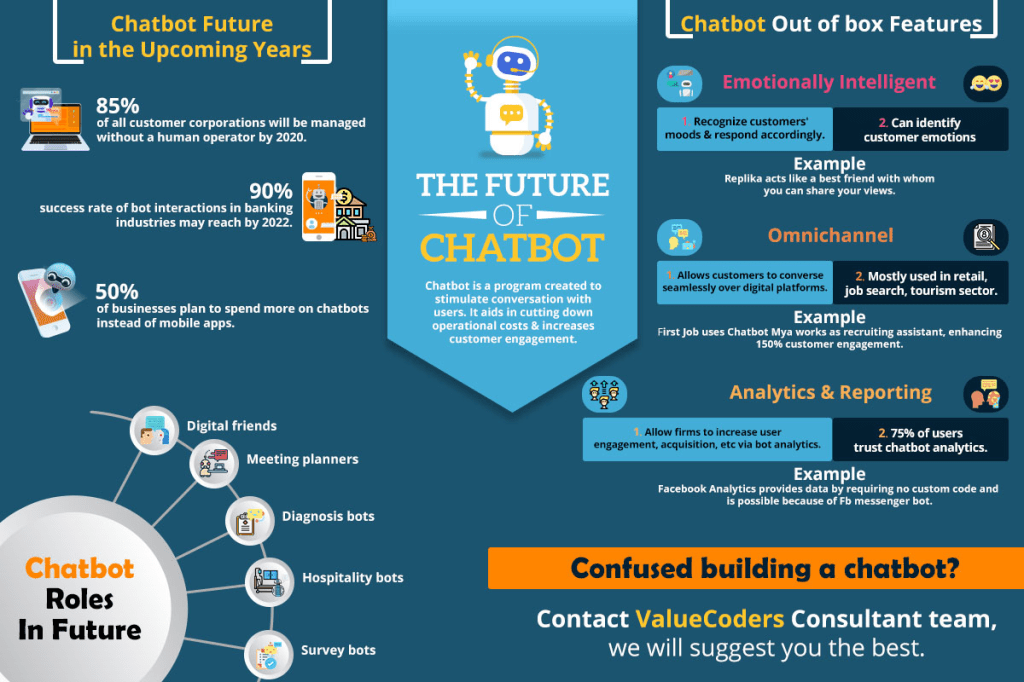
In today’s digital era, businesses are constantly seeking innovative ways to streamline their operations and enhance customer experience. One technology that has gained immense popularity in recent years is AI chatbots. AI chatbot development services have revolutionized the way businesses interact with their customers, providing automated and personalized experiences. Let’s delve into the key points that highlight the significance of AI chatbot development services and how they can benefit businesses.

  1. Enhanced Customer Service: AI chatbots offer 24/7 customer support, eliminating the need for businesses to have dedicated human resources round the clock. Chatbots can handle a wide range of customer queries, provide instant responses, and guide customers through various processes, such as placing orders or tracking shipments. By offering prompt and efficient customer service, businesses can significantly improve customer satisfaction and loyalty.
  2. Increased Efficiency and Cost Savings: AI chatbots automate repetitive tasks, reducing the workload on human agents. This automation improves operational efficiency and allows employees to focus on more complex and strategic activities. Moreover, businesses can save costs by employing chatbots instead of hiring additional customer service representatives, as AI chatbots can handle multiple customer queries simultaneously without compromising quality.
  3. Personalized Customer Experience: AI chatbots can gather and analyze customer data, enabling them to offer personalized recommendations and tailored experiences. By understanding customer preferences and behavior patterns, chatbots can suggest relevant products, services, or content, enhancing customer engagement and driving sales.
  4. Seamless Integration: AI chatbots can be seamlessly integrated into various communication channels, such as websites, mobile apps, and social media platforms. This flexibility allows businesses to provide consistent and unified customer experiences across different platforms, ensuring smooth interactions and reducing customer frustration.
  5. Scalability and Round-the-Clock Availability: As businesses grow, the demand for customer support also increases. AI chatbots are highly scalable, capable of handling a large volume of customer queries simultaneously without any deterioration in performance. Moreover, chatbots are available 24/7, ensuring uninterrupted support for customers in different time zones.
  6. Data Collection and Analysis: AI chatbots can collect valuable customer data during conversations, including preferences, buying behavior, and feedback. This data can be analyzed to gain insights into customer needs and preferences, which can help businesses make data-driven decisions, improve products and services, and develop effective marketing strategies.
  7. Multilingual Support: With businesses expanding globally, multilingual support has become a crucial aspect of customer service. AI chatbots can communicate with customers in multiple languages, overcoming language barriers and providing a seamless experience to a diverse customer base.
  8. Lead Generation and Conversion: AI chatbots can engage visitors on websites or social media platforms, offering personalized recommendations and collecting contact information. These chatbots can qualify leads, nurture them through targeted interactions, and even assist in the conversion process, thereby improving sales and revenue generation.
  9. Continuous Learning and Improvement: AI chatbots can continuously learn from customer interactions and improve their performance over time. Through machine learning algorithms, chatbots can refine their responses, understand context, and offer more accurate and relevant solutions. This iterative learning process ensures that chatbots become more effective and efficient with each interaction.
  10. Competitive Advantage: By leveraging AI chatbot development services, businesses can gain a competitive edge in the market. Chatbots offer a modern and innovative way of engaging with customers, enhancing their overall experience and establishing a reputation for being technologically advanced and customer-centric.

In conclusion, AI chatbot development services have transformed customer service and communication for businesses across various industries. With enhanced customer experiences, increased efficiency, and cost savings, businesses can leverage AI chatbots to streamline operations and gain a competitive advantage. As AI technology continues to evolve, we can expect further advancements in chatbot capabilities, making them even more integral to businesses’ success in the digital age.

To Learn More:- https://www.leewayhertz.com/ai-chatbot-development-company/

Exploring the Services of Enterprise AI

Artificial Intelligence (AI) has become an integral part of enterprise operations, revolutionizing how businesses function and making processes more efficient. AI-powered solutions can analyze vast amounts of data, automate tasks, and provide valuable insights to drive business growth. To leverage the power of AI, many enterprises are turning to AI development services. In this article, we will explore seven essential enterprise AI development services that can help businesses unlock the full potential of AI.

  1. AI Strategy Consulting:
    AI strategy consulting services provide businesses with expert guidance on incorporating AI into their overall strategy. Consultants assess the organization’s goals, challenges, and existing infrastructure to develop a roadmap for successful AI implementation. They help identify use cases, prioritize AI initiatives, and ensure alignment between AI initiatives and business objectives.
  2. Data Preparation and Management:
    Data is the fuel that powers AI systems. Effective data preparation and management services ensure that enterprises have high-quality, structured data that AI models can learn from. This includes data cleansing, normalization, feature engineering, and creating data pipelines to ensure a continuous flow of relevant data. These services help businesses optimize their data infrastructure for AI applications.
  3. Custom AI Model Development:
    Enterprises often require AI models tailored to their specific needs. Custom AI model development services focus on building machine learning models that address unique business challenges. Experts in machine learning and data science collaborate with businesses to understand their requirements and develop models that can extract valuable insights from data, automate processes, and make accurate predictions.
  4. Natural Language Processing (NLP) Solutions:
    NLP is a branch of AI that enables computers to understand and process human language. NLP solutions empower enterprises to analyze text data, extract meaning, and gain valuable insights. NLP services can be utilized for tasks such as sentiment analysis, chatbots, language translation, and text summarization, enhancing customer experiences and streamlining internal operations.
  5. Computer Vision Solutions:
    Computer vision services leverage AI algorithms to enable machines to interpret and analyze visual data, such as images and videos. Enterprises can utilize computer vision solutions for tasks like object detection, image classification, facial recognition, and anomaly detection. These services find applications in various industries, including manufacturing, healthcare, and retail, improving efficiency and accuracy in processes.
  6. AI Integration and Deployment:
    AI integration and deployment services ensure a seamless integration of AI systems into existing enterprise infrastructures. AI engineers work closely with the IT teams to deploy AI models, develop APIs, and establish data pipelines. This ensures that AI systems can access real-time data and provide insights within the existing business ecosystem, leading to better decision-making and improved operational efficiency.
  7. AI Model Monitoring and Maintenance:
    Once AI models are deployed, ongoing monitoring and maintenance are crucial to ensure their performance and accuracy. AI model monitoring services help businesses track model performance, detect anomalies, and make necessary adjustments. Regular model maintenance, including retraining and updating models with new data, is essential to ensure that AI systems continue to deliver accurate and reliable results.

In conclusion, enterprise AI development services play a vital role in helping businesses harness the power of AI. From strategic consulting to custom model development, these services assist enterprises in adopting AI solutions that align with their goals and drive business growth. By leveraging AI, businesses can unlock new opportunities, automate processes, gain valuable insights, and stay ahead in today’s competitive landscape.

To Learn More:- https://www.leewayhertz.com/enterprise-ai-development-company/

Exploring the Services of Transformer Model

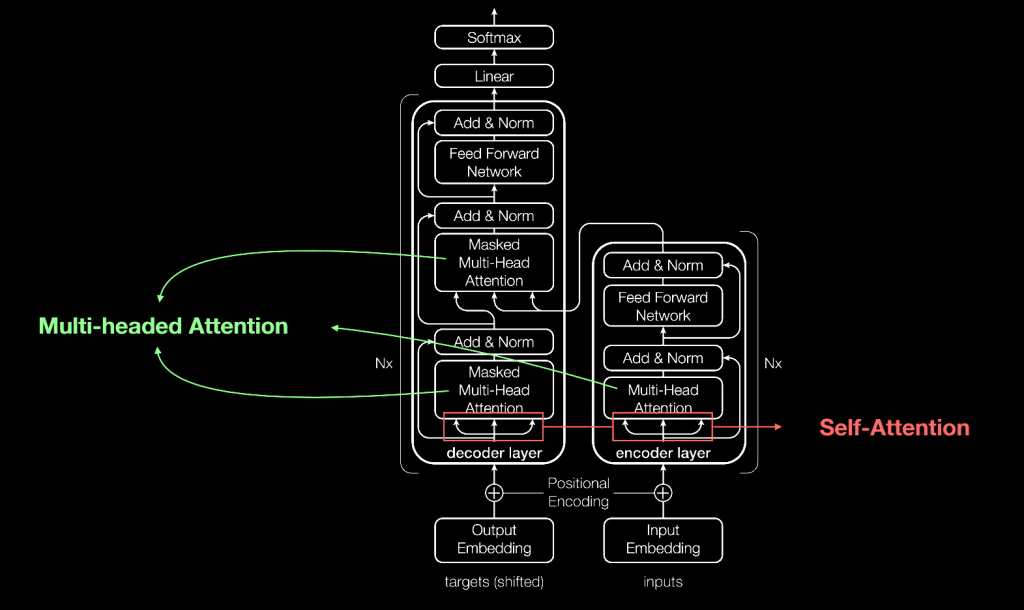
Transformer models have revolutionized the field of natural language processing (NLP) and have become the go-to architecture for various tasks, including machine translation, text generation, and sentiment analysis. Since their introduction, several advancements have been made in transformer model development, enhancing their performance and expanding their applications. In this article, we will explore seven significant developments in transformer models.

  1. BERT (Bidirectional Encoder Representations from Transformers): Introduced in 2018, BERT brought a breakthrough in NLP by pre-training a transformer model on large amounts of unlabeled text data. BERT’s bidirectional approach enabled it to capture the contextual information of a word by considering both its preceding and succeeding words. This development significantly improved the accuracy of various NLP tasks.
  2. GPT (Generative Pre-trained Transformer): GPT, developed by OpenAI, focused on leveraging the transformer architecture for text generation. The model was trained on massive amounts of internet text data, enabling it to generate coherent and contextually relevant text. GPT revolutionized the field of language generation, leading to advancements in chatbots, automated content creation, and creative writing assistance.
  3. Transformer-XL: Traditional transformer models suffer from a limitation in handling long-range dependencies due to their fixed-length context window. Transformer-XL addressed this issue by introducing recurrence within the transformer architecture. This allowed the model to remember past information and handle longer contexts, resulting in improved performance for tasks involving longer sequences, such as document understanding and language modeling.
  4. T5 (Text-to-Text Transfer Transformer): T5 introduced a unified framework for various NLP tasks, including classification, translation, summarization, and question-answering. Instead of developing task-specific models, T5 trained a single model capable of performing multiple tasks. This approach simplified the development process and made it easier to transfer knowledge across different tasks.
  5. BigBird: Traditional transformer models have a quadratic dependency on the sequence length, making them computationally expensive for longer sequences. BigBird addressed this limitation by introducing sparse attention mechanisms that scale linearly with the sequence length. This development made it feasible to process longer sequences efficiently, benefiting tasks such as document classification, document understanding, and genome analysis.
  6. Reformer: Reformer focused on optimizing the transformer architecture by introducing locality-sensitive hashing and reversible computing. These techniques reduced the memory requirements of the model without compromising its performance. The Reformer model enabled training on longer sequences while using less computational resources, making it more accessible for practical applications.
  7. DeiT (Data-efficient image Transformers): While transformers were initially designed for text-based tasks, DeiT expanded their applications to computer vision. DeiT demonstrated that transformer models can achieve state-of-the-art performance on image classification tasks with significantly fewer training samples than traditional convolutional neural networks. This development opened up new possibilities for using transformers in various image-related applications.

In conclusion, transformer models have witnessed significant advancements since their inception. From BERT’s contextual understanding to GPT’s text generation capabilities, these developments have propelled the field of NLP forward. The introduction of models like T5 and DeiT has expanded the scope of transformers beyond text, making them a versatile choice for a wide range of tasks. With ongoing research and development, transformer models are likely to continue evolving and shaping the future of artificial intelligence.

To learn More:- https://www.leewayhertz.com/transformer-model-development-services/

The Metaverse Gaming Space: Understanding Its Development and Advancement

Since the days of early consoles and arcade games in the 1980s, gaming has advanced a lot. In recent years, the metaverse gaming market has grown exponentially with the introduction of high-speed Internet and powerful hardware. The metaverse is a virtual world that is rapidly growing in popularity and is fast becoming one the most exciting and dynamic areas of the gaming industry. This article will discuss the development and evolution of the metaverse gaming industry and how it is changing the ways we interact with games.

Definition of the Metaverse

The metaverse refers a virtual place that can be accessed from anywhere on the planet via the internet. This virtual world is intended to be a recreation of the real world, and provide an immersive gaming experience. The metaverse allows players and the virtual realm to interact in real-time. This creates a sense and community.

The Evolution of the Metaverse

While the concept of the metaverse has been popularized in science fiction for many decades, technology has only recently made it possible. While the early metaverse gaming experiences weren’t very intuitive, software and hardware have advanced to make it more usable.

Virtual reality (VR), technology has been one of the most important developments in the metaverse. VR allows you to interact with the metaverse as if it were real. This has revolutionized the gaming experience, making the metaverse one among the most exciting and dynamic areas of the gaming industry.

Blockchain technology has also been a significant development in the metaverse. Blockchain technology has allowed the creation decentralized virtual economies where players can trade virtual goods or currency with one another. This has brought new depth and complexity to the metaverse and created new opportunities for players who want to interact with the virtual world.

The Meta Gaming Experience

The metaverse gaming environment is unlike any other. It is richly detailed and immersive, and players can interact with it. Players can interact with one another and the virtual environment in real-time. This creates a sense of community, and connects them. The metaverse adds depth and complexity to gaming and offers players a more dynamic, engaging experience.

One of the main benefits of the metaverse, is the ability to enter a new and exciting world. The virtual world can be used to simulate the real world so that players can feel it as real and real. This allows for a truly unique gaming experience.

The Future of the Metaverse

While the metaverse is still in the early stages of development it is fast becoming one the most exciting and dynamic areas of the gaming sector. The metaverse will likely become more immersive and interesting as technology improves. Expect to see VR and AR technologies as well as blockchain integrations.

The gaming industry has great prospects for the future of the metaverse. The metaverse can create innovative, new games and experiences unlike any we’ve ever seen. It can also revolutionize how we interact with games and create a more connected, immersive gaming experience.

Conclusion

The metaverse gaming sector is an exciting, dynamic area of the gaming industry. It is currently in rapid development. The metaverse is becoming more immersive, engaging and complex thanks to the advances in technology.

The Rise of Metaverse Application Development: Opportunities and Challenges

The idea of a Metaverse which is a virtual space in which people be involved in a myriad of actions, was in the news for a long time. Thanks to advances in technology and the advancement of metaverse-related applications is now real and the potential of this new kind that is virtual reality seems unlimited.

As the world is becoming more and more digital, businesses and people alike are looking at ways to harness the advantages of the metaverse. From entertainment and education to socializing and commerce, there are endless opportunities. What does metaverse development mean and how do you get involved?

What is Metaverse Application Development?

Metaverse application development involves developing software that runs in an imaginary world. They can range from basic games to complicated social platforms. They are used to fulfill a myriad of needs.

The most important factor in success in developing applications for the metaverse is understanding the specific challenges and opportunities associated with developing for a virtual universe. This includes taking into consideration aspects such as user experience, engagement, as well as data security.

Benefits of Metaverse Application Development

There are many advantages of developing applications that work in the metaverse. These include:

More engagement: Metaverse applications provide users with an immersive and engaging experience. This can result in increased engagement as well as longer sessions.

The new revenue stream: Through the development of applications that utilize the metaverse, companies and individuals can develop new revenue streams using virtual products and services.

Access to a worldwide audience: The metaverse is a global network, meaning that apps can be used by people from all over the world.

Better collaboration: Metaverse applications can facilitate collaboration and communications with users through ways previously unimaginable.

Steps to Get Involved in Metaverse Application Development

If you’re looking to get involved in the metaverse development process Here are some ways to start:

Develop a thorough knowledge of the metaverse and its potential: This includes exploring the various online worlds as well as platforms in use and gaining an understanding of specific challenges as well as possibilities of designing for an online world.

Build a strong team: You’ll require a group of skilled designers, developers and content creators to help you realize your ideas.

Select the appropriate platform: There are numerous digital worlds as well as platforms available to select from, and it’s crucial to pick the best one for your needs.

Develop a clear plan: It is essential to develop an outline of your venture, which will include the timeline, budget, and milestones.

Begin building: with your team assembled and your strategy in place It’s time to begin developing your metaverse app.

The Future of Metaverse Application Development

The potential for metaverse-based application development is huge and we’re only beginning to explore what’s feasible. As technology advances it is possible to experience more sophisticated virtual worlds and apps which provide even more thrilling and exciting experiences for visitors.

From entertainment and education to commerce and socializing the possibilities for metaverse application development are limitless. If you’re a company looking to expand your reach , or someone looking to develop an additional revenue stream it’s the perfect opportunity to join this exciting and rapidly expanding field.